
The 47% cyber security confidence gap: responsibility is not the same as readiness
Published: 5th October 2026
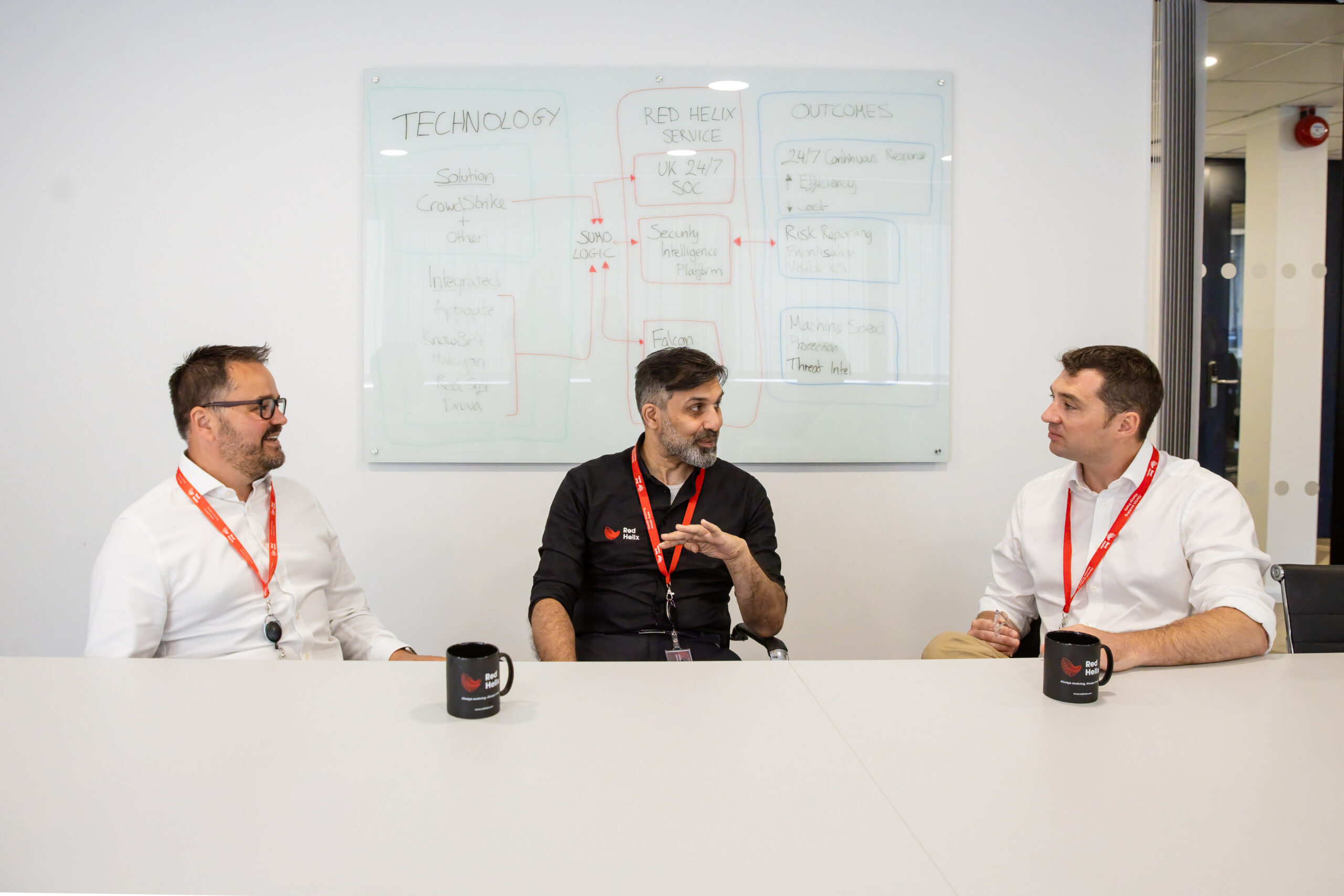
Almost half of the people responsible for cyber security in UK businesses lack confidence in their ability to deal with a cyber attack and have not outsourced the function.
That is one of the most important findings in the Government’s Cyber security skills in the UK labour market 2026 report. The research found that 47% of the individuals responsible for cyber security in UK businesses lacked confidence in responding to breaches or attacks and had not brought in an external provider to support them.
The same study found that 57% of UK businesses had a basic technical cyber security skills gap, an increase from 49% the previous year.
Together, these figures expose a significant gap between having somebody who is responsible for cyber security and having the specialist resources needed to manage it effectively.
What is the UK cyber security confidence gap?
The cyber security confidence gap describes the difference between being given responsibility for protecting an organisation and having the expertise, capacity and support required to do so confidently.
In many mid-sized businesses, cyber security sits with an IT Director, Head of IT, CTO or Head of Engineering. These leaders may understand their technology estate extremely well, but they are also responsible for infrastructure, applications, users, suppliers, budgets and business transformation.
Cyber security is only one part of an already broad role. When an incident occurs, however, they may suddenly be expected to investigate malicious activity, assess its severity, contain the threat, preserve evidence, communicate with executives and determine whether legal, regulatory or contractual reporting is required.
Those demands are difficult to meet without specialist preparation and support.
Why are so many organisations struggling with cyber security skills?
The Government report suggests that the problem cannot be solved through recruitment alone.
The UK cyber security workforce grew by approximately 2%, while job advertisements for core cyber security roles increased by 7%. More graduates are entering the profession, but enrolment in cyber security apprenticeships has fallen.
For an individual mid-market organisation, building an internal 24/7 security operation is particularly challenging. Continuous coverage requires far more than employing one security specialist. It requires enough analysts to cover shifts, holidays, absence, training and escalation, alongside the technology, threat intelligence and operating processes needed to support them.
Even organisations with capable internal teams can struggle to maintain specialist expertise across endpoints, identities, cloud environments, networks, applications and emerging AI systems.
This is why the question is not simply whether an organisation has somebody responsible for cyber security. It is whether that person has the operational capacity behind them to detect, investigate and respond when something happens.
What does genuine 24/7 cyber security coverage involve?
Not every service described as “24/7” provides the same level of protection.
Some services monitor alerts outside office hours but defer investigation until the next working day. Others route overnight activity to a general IT helpdesk or an offshore team with limited knowledge of the customer’s environment. Some notify the customer that an alert has occurred but leave containment and response entirely to the internal IT team.
A genuine 24/7 Security Operations Centre should provide continuous access to qualified cyber security analysts who are able to investigate activity, establish context and take an agreed response at any time.
Organisations comparing managed detection and response or SOC services should ask:
- Are qualified cyber security analysts working full shifts around the clock?
- Is the service delivered from the UK or transferred elsewhere overnight?
- Does the provider investigate alerts or simply forward them?
- Can its analysts contain threats under agreed procedures?
- Does it monitor endpoint, identity, cloud and wider security data?
- What response times apply to critical incidents?
- How will it learn the organisation’s environment and priorities?
- Will it help improve security over time, or only report activity?
- Can it provide useful evidence to executives, boards, insurers and auditors?
The answers reveal far more than the phrase “24/7 monitoring” on a service description.
Does AI remove the need for security analysts?
AI is already changing security operations. The Government research found that 70% of UK cyber security providers now use AI in their day-to-day work, up from 53%.
Used well, AI can help analysts correlate large volumes of telemetry, identify suspicious patterns, enrich alerts and accelerate investigations. It can reduce repetitive work and help a Security Operations Centre respond more quickly.
It does not remove the need for accountable human expertise.
Security incidents often involve incomplete evidence, operational consequences and business-specific decisions. An automated system may identify suspicious behaviour, but an experienced analyst must still determine what it means in context, whether containment is justified and how the organisation should respond.
The stronger operating model is therefore human-powered and AI-enabled. Technology provides speed and scale, while qualified analysts bring judgement, accountability and an understanding of the customer’s environment.
When should a business consider outsourcing cyber security?
Outsourcing does not mean transferring responsibility for cyber risk. It gives the organisation access to specialist operational capability that would be difficult or expensive to maintain internally.
An outsourced SOC or MDR service is worth considering when:
- Cyber security responsibility sits with a wider IT or engineering role
- The internal team cannot provide continuous monitoring
- Alerts are accumulating faster than the team can investigate them
- The organisation depends on several disconnected security tools
- A key security employee is leaving or difficult to replace
- Customers, insurers or regulators expect stronger evidence of controls
- The board wants clearer reporting on cyber risk and improvement
- The organisation has experienced a near miss or security incident
- Existing outsourced support forwards alerts without taking meaningful action
The right model may be fully managed or co-managed. An established security team may retain control while using an external SOC for continuous coverage, specialist investigation and surge capacity. A smaller team may need a provider to manage the security technology and operational response more comprehensively.
How Red Helix closes the cyber security confidence gap
Red Helix provides managed cyber security services through a UK-based Security Operations Centre operating 24 hours a day, 365 days a year.
Our SOC is staffed continuously by qualified cyber security analysts working dedicated shifts. Overnight activity is not transferred to an IT helpdesk, deferred until morning or routed offshore.
We combine experienced analysts with AI-supported CrowdStrike and Sumo Logic technology to monitor activity across endpoints, identities, cloud environments and other security data. When suspicious activity is detected, our analysts investigate it, establish its context and respond according to agreed procedures.
Every customer is supported by a dedicated analyst pod that develops familiarity with its environment. This means our service is not limited to processing isolated alerts. We help identify priorities, strengthen detections and improve the organisation’s security posture over time.
Our Security Intelligence Platform brings this work together in a clear view of security posture, performance and improvement, helping IT leaders communicate confidently with boards and other stakeholders.
Where further assurance is required, Risk Crew adds governance, penetration testing, continuous security testing, vCISO support and AI security expertise. This connects day-to-day protection with independent testing and longer-term risk management.
Responsibility needs operational support
The Government’s findings should not be interpreted as a criticism of the people responsible for cyber security. In many organisations, highly capable IT leaders are being asked to manage a specialist, fast-moving and continuous risk alongside an already demanding role.
The 47% confidence gap is therefore a resourcing problem as much as a skills problem.
Closing it does not always require building a large internal security department. It requires giving the responsible person access to the people, technology, processes and evidence needed to make confident decisions before, during and after an incident.
If you are responsible for cyber security but do not have specialist coverage around the clock, Red Helix can help you assess the gaps and determine the right managed or co-managed approach.