
Fibre Networks
The cornerstone of reliable communications.



Fibre Network Switching
Whether you’re involved with fibre networks that move the world’s Internet traffic, build vehicles that use fibre links, or make industrial equipment that powers manufacturing, our specialist fibre network products can help you at every step of the way. From fibre network test, simulation and impairment, to real-time monitoring and automated protection switching – we have your needs covered.
Wireline, RF over fibre, and data centre networks need to be fast, flexible, and adaptive – as does how they’re controlled and reconfigured.
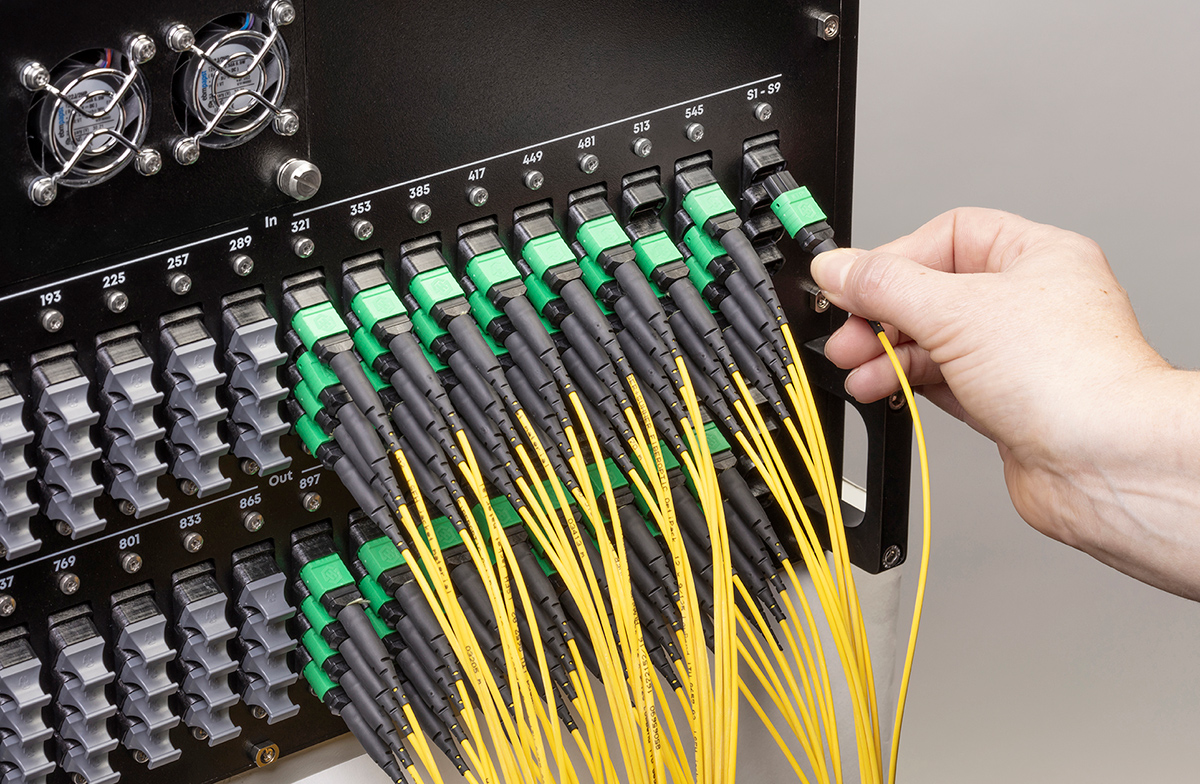
And using Optical Circuit Switches, Operators can remotely provision, reconfigure, and protect the layer 1 switching infrastructure with a simple to use drag and drop interface.
This centralised control of connections removes the need for remote site visits, lets you switch large elephant flows during peak times, and enables the mass aggregation of monitored WAN links for security obligations.
Switching in the optical domain also provides latency and energy savings by removing the need to convert inbound light signals to electrical then back again to light before egress. This lets you switch 100’s of fibres, each with 100 channels of 100G, using just power of a light bulb.
Read more about our Optical Circuit Switches

Fibre Network Testing
OTDRs for precision accuracy testing
Whether you want to characterise short length fibre or find the precise location of fibre artifacts, our Luciol high resolution OTDR provides sub-cm event accuracy – perfect for:
- Short length fibre assembly
- Fibre optic harnesses / harsh environments
- Military vehicles, trains, ships, and aircraft
- Fibre sensor development
- Oil / gas Christmas tree optical links
Visit our Luciol LOR-200/220 OTDR page here
Fibre Network Simulation and Impairment
In test labs, bare optical fibre is vital for accurately simulating network spans to develop, certify, and demonstrate devices.
Full fibre lengths precisely replicate optical performance and latency, ensuring key objectives are met – which is why we teamed up with M2 Optics to bring their customisable fibre network simulation and impairment solutions to the UK.

Fibre Network Simulation
Our M2 Optics latency simulators are tailored to your fibre type and configuration, accurately replicating network spans and links with top-tier efficiency.
From thousands of kilometres of G.654 submarine fibre, to portable OM3 spools of a few hundred metres, they deliver precise performance across all scenarios.
Download our M2 Optics catalogue here
Fibre Network Impairment
Fibre delay lines are crucial for signal timing and latency-sensitive applications.
Our M2 Optics high-precision solutions, available in rack-mount and portable enclosures, ensure space-efficient installation and seamless connectivity.
Other solutions in our M2 Optics portfolio include:
- Optical time delays & delay lines
- Fibre optic event simulators
- Specialised fibre spools
- Speciality fibre components
- 3D design and part production

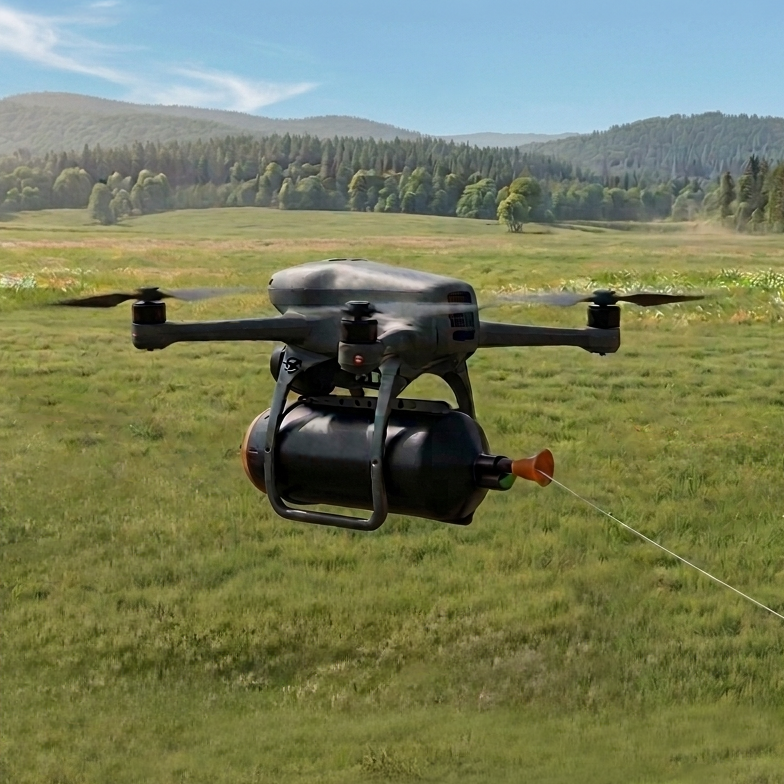
Customised fibre optic spools for tethered drones
Tethered fibre optic drones are increasingly used in defence and surveillance due to their robust, point-to-point communication architecture. Unlike RF-based UAVs, they use a physical optical fibre link to transmit command and control, telemetry, and HD video as optical signals.
This approach eliminates RF interference, jamming, and spectrum congestion, while reducing latency and interception risk. The result is a secure, high-bandwidth, deterministic link with wired-level reliability.
Our M2 Optics OptiTether™ solutions are designed for FPV, UAV, and UGV operators requiring secure, real-time control in demanding environments.
By replacing RF with fibre, they enable ultra-low latency performance while minimising detection, interference, and jamming risks.

Red Helix: Enabling Fibre Network Success
Since 1984 (and previously called Phoenix Datacom), we’ve been helping companies like yours to build, maintain, and monitor their networks.
Many of the UK’s subsea, metro, and access area networks, (and the products on which they are based,) are built and tested using our industry-leading fibre network equipment.
And when it comes to manufacturing in transport, military, oil / gas, and specialist laser-based equipment, our solutions help ensure precision accuracy and quality whilst reducing downtime during essential maintenance. Whatever your needs may be, you’re in safe hands with Red Helix.
Contact us today to discuss your fibre network needs.
Contact us today to discuss your fibre network needs

Related resources



Talk to an expert
Contact us