
Huber+Suhner Polatis Optical Matrix Switching Solutions
Powering optical connectivity for critical networks. Instant, ultra-high-capacity connectivity powered by direct light-path switching

Red Helix is proud to be a UK partner of Huber+Suhner Polatis, delivering advanced Layer 1 Optical Matrix Switching solutions for organisations where speed, accuracy, determinism, and reliability are paramount.
Polatis optical circuit switches use direct light-path switching to establish connections entirely in the optical domain. It eliminates the need for optical-to-electrical-to-optical (O-E-O) conversion. This reduces network complexity, lowers energy consumption, and enables near-instantaneous, ultra-low-latency switching across high-capacity environments.
Together, Red Helix and Huber+Suhner Polatis empower organisations with future-ready optical connectivity that scales with their most demanding workloads.
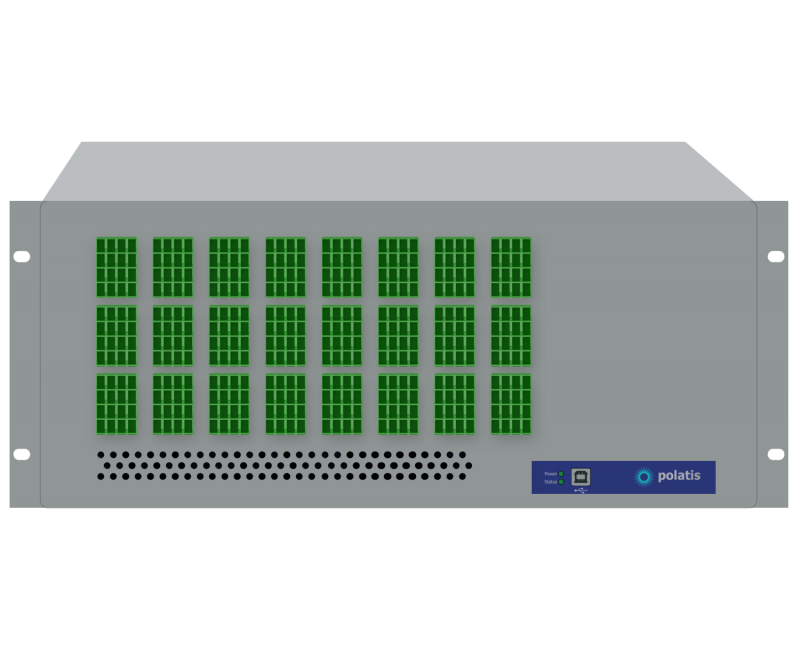
Series 6000: Scalable Single-Mode Optical Matrix Switch
8×8 to 192×192 Ports
The Polatis Series 6000 delivers high-performance, non-blocking optical matrix switching across a wide range of port configurations, scaling seamlessly from small deployments to very large optical fabrics.
Engineered for mission-critical environments, the Series 6000 combines ultra-low optical loss, fast switching times, compact form factor, and energy-efficient operation to meet demanding performance and reliability requirements.
Key Capabilities:
- Single-mode optical matrix switching from 8×8 to 192×192 ports
- Non-blocking, deterministic light-path connectivity
- Ultra-low insertion loss for high signal integrity
- Compact, energy-efficient design
- Proven all-optical switching architecture

Ideal Use Cases:
- Hybrid packet-optical data centres
- Cloud and service provider networks
- Telecom and critical infrastructure
- Advanced test and validation environments
Series 6000 Ultra Q: Precision Optical Switching
Single-Mode 16×16 Ports
The Polatis Series 6000 Ultra Q is a compact 16×16 all-optical circuit switch engineered for environments where optical loss tolerance is extremely tight and deterministic performance is essential.
Enhanced optical design and the use of ultra-low-loss connectors. This is optimised for quantum and other loss-sensitive applications to minimise signal attenuation, ensuring exceptional optical performance where every fraction of a decibel matters.
Key Capabilities:
- Non-blocking 16×16 single-mode optical switching
- Ultra-low insertion loss for maximum signal preservation
- Deterministic, all-optical light-path connectivity
- Compact form factor for lab and specialised deployments
Ideal Use Cases:
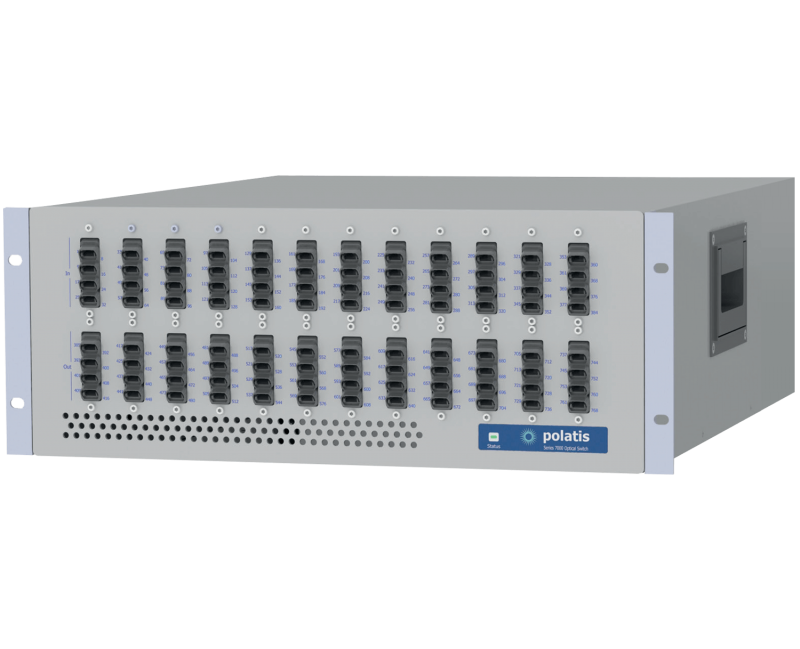
Series 7000: Large-Scale Optical Matrix Switch
Single-Mode up to 384×384 Ports
The Polatis Series 7000 delivers large-scale, non-blocking optical circuit switching in configurations of up to 384×384 ports, making it one of the highest-density all-optical switching platforms available.
Designed for the most demanding high-capacity environments, it combines ultra-low optical loss, fast switching performance, and a compact footprint to support massive optical fabrics without compromising determinism or reliability.
Key Capabilities:
- Single-mode optical switching up to 384×384 ports
- Non-blocking, deterministic photonic connectivity
- Ultra-low latency and fast reconfiguration
- Compact, energy-efficient design

Based on Polatis’s proven all-optical architecture, the Series 7000 has a long track record of deployment across data centre, telecom, defence, and advanced test environments, delivering reliability at scale.

Why Red Helix & Huber+Suhner Polatis
Red Helix combines Huber+Suhner Polatis’s industry-leading optical switching technology with deep expertise in critical network design, integration, and assurance.
We help organisations:
- Design and deploy Layer 1 optical switching architectures
- Integrate optical fabrics into SDN-driven environments
- Reduce latency, energy consumption, and operational complexity
- Achieve deterministic, high-performance connectivity at scale
Speak to an Optical Connectivity Expert
Looking to deploy all-optical circuit switching for data centres, telecom networks, research environments, or mission-critical infrastructure?
Talk to a Red Helix specialist
Request technical guidance or product information